

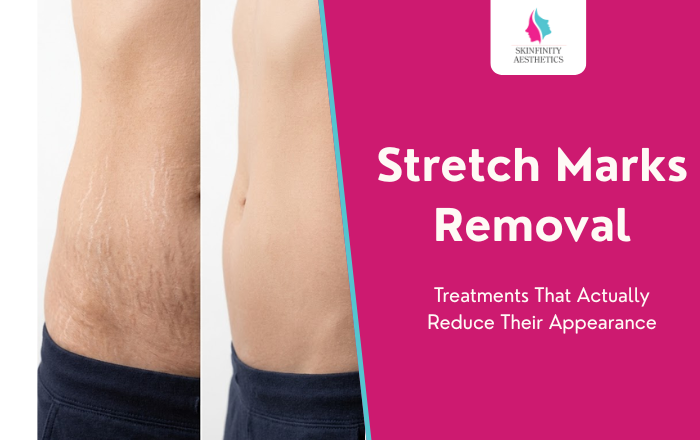
Stretch marks show up on millions of bodies, yet most people still feel self-conscious when they spot those silvery or reddish lines on their skin. Whether they appeared after pregnancy, a growth spurt, weight changes, or muscle gain, one thing is true: they’re incredibly common, and there are real treatments that can fade them. This guide walks you through what actually works, what’s mostly hype, and how to choose the right approach for your skin.
What Are Stretch Marks and Why Do They Form?
Stretch marks, medically called striae, happen when your skin stretches or shrinks faster than it can produce collagen and elastin to keep up. This rapid change tears the middle layer of skin, called the dermis, leaving behind visible streaks.
They often start as pink, purple, or reddish lines (striae rubra) and gradually fade into white or silvery marks (striae alba) over time. Common causes include:
- Pregnancy
- Puberty growth spurts
- Rapid weight gain or loss
- Bodybuilding or fast muscle growth
- Hormonal changes, including corticosteroid use
Genetics also play a role. If your parents had stretch marks, you’re more likely to develop them too.
Can Stretch Marks Be Completely Removed?
Here’s the honest answer: no treatment can erase stretch marks 100 percent. However, several options can significantly reduce their appearance, making them less noticeable and blending them closer to your natural skin tone. The best results usually come from starting treatment early, while the marks are still red or purple, since they respond more easily than older, faded scars.
Topical Treatments for Stretch Marks
Retinoid Creams
Prescription-strength retinoids, like tretinoin, help rebuild collagen in the skin. Studies show they work best on newer, reddish stretch marks rather than older white ones. Retinoids aren’t recommended during pregnancy or breastfeeding, so always check with a doctor first.
Hyaluronic Acid
This ingredient boosts hydration and has shown promise in improving skin elasticity, which may help reduce the depth and visibility of early stretch marks.
Centella Asiatica (Cica) Extracts
Often found in Korean skincare, this plant-based ingredient supports collagen production and is gentle enough for sensitive or postpartum skin.
While creams and oils are the most affordable option, they generally offer modest results. Think of them as a supportive step rather than a standalone cure.
Professional Treatments That Show Real Results
If topical products aren’t giving you the improvement you’re hoping for, in-clinic treatments tend to deliver more noticeable and lasting change.
1. Microneedling
Microneedling uses tiny, fine needles to create controlled micro-injuries in the skin. This triggers your body’s natural healing response, boosting collagen and elastin production. It works well for both red and white stretch marks and is often combined with platelet-rich plasma (PRP) for enhanced results.
2. Laser Therapy
Different lasers target different stages of stretch marks:
- Pulsed dye lasers work well on newer, red stretch marks by targeting blood vessels.
- Fractional lasers (like fractional CO2 or Er:YAG) help resurface the skin and stimulate collagen, making them effective for older, white stretch marks.
Laser treatment usually requires multiple sessions spaced weeks apart, and results build gradually.
3. Chemical Peels
Medium-depth chemical peels remove the outer layers of skin, encouraging fresh skin cell turnover. They can improve texture and tone, especially when paired with other treatments.
4. Radiofrequency Microneedling
This combines microneedling with radiofrequency energy to heat deeper skin layers, further stimulating collagen. It’s particularly effective for stretch marks on the abdomen and thighs.
5. Platelet-Rich Plasma (PRP) Therapy
PRP uses your own blood platelets, rich in growth factors, to accelerate skin repair. When paired with microneedling, many people notice smoother, more even-toned skin over a few months.
Comparison of Popular Stretch Mark Treatments
| Treatment | Best For | Sessions Needed | Downtime |
|---|---|---|---|
| Retinoid Cream | Early, red stretch marks | Ongoing daily use | None |
| Microneedling | Red and white marks | 3 to 6 sessions | 1 to 3 days |
| Laser Therapy | Both stages, texture | 4 to 8 sessions | 2 to 5 days |
| Chemical Peels | Skin tone and texture | 3 to 5 sessions | 2 to 4 days |
| PRP + Microneedling | Overall skin repair | 3 to 6 sessions | 1 to 3 days |
Home Remedies: Do They Really Work?
You’ve probably heard that coconut oil, cocoa butter, or aloe vera can prevent or remove stretch marks. While keeping skin moisturized supports elasticity and comfort, there’s limited scientific evidence that these remedies significantly fade existing marks. They’re worth using for skin hydration, but don’t expect dramatic results from natural oils alone.
Tips to Prevent Stretch Marks From Getting Worse
- Keep your skin well hydrated with a good moisturizer.
- Maintain a steady, gradual weight change rather than rapid fluctuations.
- Eat a balanced diet rich in vitamin C, vitamin E, and zinc, which support collagen health.
- Stay consistent with any treatment plan, since results take time.
Key Takeaways
- Stretch marks cannot be fully erased, but their appearance can be significantly reduced.
- Early treatment on red or purple marks tends to work better than waiting until they turn white.
- Professional treatments like microneedling, laser therapy, and PRP offer more noticeable results than creams alone.
- Consistency and patience matter. Most treatments need several sessions over weeks or months.
- A dermatologist can help you choose the safest and most effective option for your skin type.
Frequently Asked Questions
Q1: Can stretch marks disappear completely on their own?
No, but older marks often fade to a lighter, less noticeable color over time, even without treatment.
Q2: Which treatment works fastest for stretch marks?
Laser therapy and microneedling tend to show visible improvement faster than topical creams, though full results usually take a few months.
Q3: Are stretch mark removal treatments painful?
Most treatments cause mild discomfort, often compared to a light scratching or tingling sensation. Numbing cream is commonly used to keep sessions comfortable.
Q4: Can stretch marks come back after treatment?
Existing treated marks won’t return, but new stretch marks can form if your skin stretches again, such as during another pregnancy or rapid weight change.
Q5: Is it safe to treat stretch marks during pregnancy?
Most active treatments, including retinoids and lasers, aren’t recommended during pregnancy. Gentle moisturizing is the safer route until after delivery.
Have questions? We’re just a message away! Contact us on WhatsApp — Click Here to Chat with Us
Ready to Reduce Your Stretch Marks? Book a Consultation Today
Stretch marks are a normal part of how skin adapts to change, and there’s absolutely nothing wrong with having them. That said, if you’d like to reduce their appearance, a combination of consistent skincare and professional treatment usually gives the best outcome. The key is patience, realistic expectations, and choosing a method that fits your skin type and lifestyle.
If you’re looking for personalized guidance on reducing stretch marks, consider consulting Dr. Priyanka Tambe, a qualified Cosmetologist specializing in advanced skin rejuvenation treatments, at Skinfinity Aesthetics in Airoli, Navi Mumbai. A professional evaluation can help you understand which treatment suits your skin best and set realistic expectations for your results.