

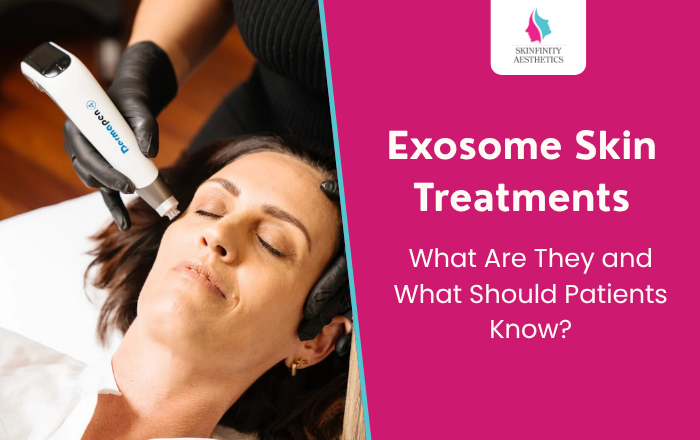
Exosome skin treatments have become a popular topic in aesthetic skincare, especially among people looking for options for dull skin, uneven texture, fine lines, pigmentation or acne scars. But before choosing this treatment, it is important to understand what exosomes are, what the current research actually shows, and why the product and treatment method matter.
Exosomes are tiny extracellular vesicles released by cells that can carry proteins, lipids and other biological signals between cells. Researchers are studying their possible role in skin repair, inflammation, collagen activity and tissue regeneration. In aesthetic medicine, exosome based products may be used topically or alongside procedures such as microneedling or laser treatments.
The important point is that exosome treatments are still an evolving area of dermatology. Recent reviews have found encouraging early results for skin rejuvenation, but the studies vary widely in product source, preparation, delivery method and treatment protocol. Long term safety and effectiveness also need more research.
What Are Exosomes?
Exosomes are nanosized extracellular vesicles that cells release as part of normal cell communication. They can transport different biological molecules that influence how other cells behave.
In skincare research, scientists are interested in whether these signals may support processes involved in wound healing, inflammation control, collagen production and skin regeneration. This is one reason exosomes are being investigated for aesthetic applications.
However, not every product marketed as an “exosome treatment” is the same. Exosomes can come from different biological sources, and the way they are isolated, processed, stored and delivered can vary considerably.
How Are Exosome Skin Treatments Used?
The treatment method depends on the product and the clinic’s protocol. In published studies, exosome based products have been used as topical applications or together with procedures that create controlled pathways into the skin, such as microneedling and fractional laser treatments.
This distinction matters. A topical product applied to intact skin is not the same as an injectable exosome product. Patients should ask exactly how the product will be used rather than assuming that all exosome treatments work in the same way.
If exosomes are being combined with another procedure, the expected downtime and side effects may be related partly to that procedure. For example, temporary redness, sensitivity or swelling can occur after microneedling or laser treatment.
What Skin Concerns Are Exosome Treatments Used For?
Research into exosome based dermatology has explored several potential applications, including:
- Fine lines and visible signs of skin ageing
- Uneven skin texture
- Skin hydration and elasticity
- Some forms of pigmentation
- Acne scars and post procedure skin recovery
- General skin rejuvenation
Recent human studies and reviews have reported improvements in outcomes such as wrinkles, pigmentation, elasticity, hydration and overall appearance in some treatment settings. However, the evidence is not strong enough to assume that every patient will experience the same result.
What Benefits Can Patients Expect?
The possible benefit of an exosome based skin treatment is improved skin appearance and texture, depending on the concern being treated and the protocol used. Some studies suggest that exosome based approaches may support collagen and elastin related changes and improve certain visible signs of skin ageing.
But results should be discussed realistically. Current research is still limited by small studies, different products and treatment methods, and relatively short follow up periods. A 2026 scoping review of topical exosomes for skin rejuvenation found that human clinical evidence remains limited and that commercially available products can differ substantially in their sources and product information.
In other words, an exosome treatment should not be presented as a guaranteed solution or as a replacement for established dermatological treatments.
Are Exosome Skin Treatments Safe?
Safety depends on several factors, including the source of the product, manufacturing and storage standards, sterility, how it is administered and whether the product is intended for that particular use.
Research on topical use has generally reported a relatively favourable short term safety profile, but long term data are limited. Reviews have also highlighted safety concerns with some off label injectable applications, including reports of serious adverse reactions.
Regulation is another important consideration. The U.S. FDA states that there are currently no FDA approved exosome products and has warned consumers about unapproved exosome products marketed for medical treatment. This does not by itself determine the regulatory status of every cosmetic product in India or another country, so patients should ask about the product’s intended use and applicable local regulatory requirements.
What Should You Ask Before Choosing an Exosome Treatment?
Before booking an exosome skin treatment, ask the treating professional these questions:
- What exact product will be used? Ask for the product name, manufacturer and intended use.
- What is the source of the exosomes? Products can differ in biological source and preparation.
- How will the product be applied? Clarify whether it is topical or being used with microneedling, laser or another procedure.
- What evidence supports this particular treatment protocol? Evidence for one product or method should not automatically be applied to another.
- What side effects and downtime should I expect? This is especially important when another procedure is performed at the same time.
- What alternatives are available? Depending on your concern, established treatments may also be appropriate.
- How will my skin be assessed before treatment? A consultation can help identify whether the concern is suitable for this type of procedure.
Who May Be a Suitable Candidate?
Whether an exosome based treatment is appropriate depends on the individual’s skin concern, skin condition, medical history and the exact product and procedure being considered.
A consultation with a qualified skin professional is important if you have active acne, an infection, significant inflammation, a history of unusual scarring, allergies or another ongoing skin condition. Patients who are pregnant or breastfeeding should also discuss any cosmetic procedure with their treating clinician before proceeding.
The goal of the consultation should be to understand the actual skin problem first and then decide whether exosomes have a reasonable role in the treatment plan.
What Is Recovery Like After an Exosome Skin Treatment?
Recovery depends mainly on how the treatment is delivered. A simple topical application may have little or no downtime, while microneedling or laser based procedures can cause temporary redness, warmth, sensitivity or swelling.
Your clinician should explain what to expect before treatment and provide aftercare instructions. Avoid adding strong active skincare products immediately after a procedure unless your clinician advises you to do so.
Exosomes vs Other Skin Rejuvenation Treatments
Exosomes are not automatically better than other skin treatments. The appropriate option depends on the concern being treated.
For example, someone with acne scars may be considered for microneedling, chemical peels or laser based procedures depending on the type and depth of scarring. Someone concerned about hydration or dullness may have other facial or skin rejuvenation options. Pigmentation may require a different approach altogether.
This is why a skin assessment is more useful than choosing a treatment simply because it is trending online.
Frequently Asked Questions About Exosome Skin Treatments
1. What is an exosome skin treatment?
An exosome skin treatment uses a product containing or derived from exosome related material, usually applied topically or used alongside a skin procedure, with the aim of supporting skin rejuvenation. Research is still developing.
2. Are exosome treatments safe for the skin?
Short term studies of topical exosome applications have generally reported favourable safety findings, but long term safety data are limited and product quality varies. The exact product and treatment method should be discussed with a qualified clinician.
3. Can exosomes be combined with microneedling?
Yes, published studies have investigated exosome based products alongside microneedling and other procedures. Whether this combination is appropriate depends on the product, skin concern and clinical protocol.
4. Are exosome treatments FDA approved?
The U.S. FDA states that there are currently no FDA approved exosome products. Regulatory status can differ by country and by the intended use of a product, so patients should ask about the specific product being offered.
5. How long do exosome skin treatment results last?
There is no single answer because studies use different products and protocols and follow patients for different periods. More research is needed to establish how long benefits last and how often treatment may need to be repeated.
Considering Exosome Skin Treatment in Airoli, Navi Mumbai?
If you are considering an exosome based skin treatment, start with a consultation rather than choosing a product based only on online claims. Skinfinity Aesthetics Laser Clinic in Airoli, Navi Mumbai, is led by Dr. Priyanka Tambe, Skin & Hair Specialist with 11+ years of experience.
During a consultation, your skin concern can be assessed and suitable treatment options can be discussed based on your needs. You can also ask questions about the product being considered, how it will be used, expected results, possible side effects and aftercare.
Explore Skinfinity Aesthetics services or learn more about the skin clinic in Airoli.