

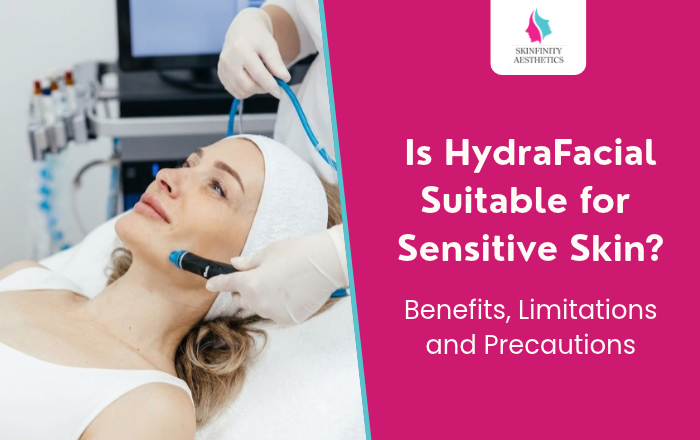
If your skin stings with a new moisturiser, turns pink after a scrub or reacts to the wrong sunscreen, you have probably wondered whether a HydraFacial for sensitive skin is a good idea. The treatment is known for being gentle compared with many in-clinic procedures, but “gentle” does not mean the same thing for everyone.
Sensitive skin is not a single diagnosis. It can mean a weak skin barrier, rosacea, eczema, allergies or simply skin that reacts easily. This guide explains how a HydraFacial works, where it may suit sensitive skin, where it falls short and which precautions matter before you book.
What Is a HydraFacial?
A HydraFacial is a multi-step facial done with a handheld device. It is usually described in a few stages:
- Cleansing and exfoliation: the skin surface is cleaned and dead cells are loosened.
- Peel step: a mild acid solution, often glycolic or salicylic acid, is applied for a short time.
- Extraction: gentle suction clears congestion from pores.
- Hydration and protection: serums are applied to leave the skin moisturised.
Because the steps can be adjusted, the treatment is often discussed for skin that needs hydration and cleansing. You can read the full process in our guide to HydraFacial process and benefits.
Is HydraFacial Suitable for Sensitive Skin?
Sometimes, yes, but it depends on why your skin is sensitive and what it looks like on the day of treatment. Many people with mild sensitivity, dryness or a tendency to flush can have the treatment when the doctor chooses the right settings, serums and peel strength.
It is a different story when the skin is actively inflamed. A flare of eczema, rosacea, contact dermatitis or a sunburn means the barrier is already compromised. Adding exfoliation and suction as well can make it worse. In such cases, the usual advice is to settle the flare first and revisit the facial later.
Only an assessment of your skin can answer this properly, so a consultation before the first session is a sensible step.
Possible Benefits for Sensitive Skin
When skin is suitable for the treatment, the potential benefits are modest and practical:
- Gentle cleansing without harsh scrubbing or rubbing
- Light exfoliation that can be matched to your skin’s tolerance
- Added hydration from serums, which may help dry, tight skin feel more comfortable
- Clearing of blackheads and surface congestion through suction
- Serums that can be chosen or skipped according to your sensitivities
Results vary from person to person, and a HydraFacial is a cosmetic skin treatment. It does not treat conditions such as eczema, rosacea or allergic reactions.
Limitations to Keep in Mind
It Is Not a Treatment for Skin Conditions
A HydraFacial is not designed to treat rosacea, eczema, psoriasis or dermatitis. If you suspect a skin condition, it needs a proper diagnosis and medical care of its own.
Some Steps May Cause Temporary Reactions
The acid step and the suction can leave sensitive skin looking pink, feeling warm or slightly tight for a few hours. This usually settles, but it can last longer in reactive skin.
Ingredients Matter
Salicylic acid, fragrance and certain serum ingredients can trigger reactions in some people. If you have a known allergy, including a salicylate allergy, the team needs to know in advance.
One Session Is Not a Fix
Skin that is sensitive because of a damaged barrier usually needs consistent home care, such as a mild cleanser, a moisturiser and daily sunscreen, alongside any clinic treatment.
Who Should Avoid or Postpone a HydraFacial?
It is usually better to wait, or to choose another approach, if you have:
- An active eczema, rosacea or dermatitis flare
- Sunburn, windburn or very irritated skin
- Open wounds, cuts or broken skin in the treatment area
- Active skin infections, including cold sores
- Very recent peels, laser treatments or microneedling
- A known allergy to ingredients used in the treatment
Tell your doctor if you use prescription skincare, take isotretinoin or other medicines that affect the skin, are pregnant or breastfeeding, or have a history of keloid scarring. These details can change what is appropriate for you.
Precautions Before Your Session
A little preparation reduces the chance of irritation:
- Share your skin history: allergies, past reactions, current products and medicines.
- Ask about a patch test: a small test area can show how your skin responds to a serum or acid.
- Pause strong actives: retinoids, exfoliating acids and scrubs are often stopped for a few days before. Follow your doctor’s advice.
- Avoid sun exposure: do not arrive with tanned or sunburnt skin.
- Keep the first session simple: mild settings and fewer add-ons let you see how your skin reacts.
Aftercare for Sensitive Skin
What you do afterwards matters as much as the facial itself:
- Use a mild, fragrance-free cleanser and a simple moisturiser.
- Apply broad-spectrum sunscreen every morning and reapply when outdoors.
- Avoid scrubs, retinoids and strong acids until your doctor says you can restart.
- Skip very hot showers, saunas and heavy exercise on the same day.
- Do not pick at flaking skin or any small bumps.
Contact the clinic if redness, burning, swelling or itching continues beyond a day or two, or if you notice blisters or oozing.
How to Decide if It Is Right for You
Ask yourself three questions. Is my skin calm right now? Do I know what triggers my reactions? Am I willing to start gently and follow aftercare? If the answer to any of these is unclear, a consultation will help. You can also look at our HydraFacial treatment page to see how the treatment is offered at the clinic.
Frequently Asked Questions About HydraFacial for Sensitive Skin
1. Can people with sensitive skin get a HydraFacial?
Many people with mild sensitivity can, provided the skin is calm and the doctor adjusts the products and settings. It is not suitable during active flares or when the skin is broken.
2. Will a HydraFacial cause redness?
Mild redness or warmth for a few hours is possible, especially in sensitive skin. If it lasts longer or comes with burning or swelling, contact the clinic.
3. Is a HydraFacial suitable for rosacea or eczema?
Not during a flare. These conditions need medical assessment first, and any facial should be discussed with your doctor beforehand.
4. How often can sensitive skin have a HydraFacial?
There is no fixed schedule. The gap between sessions depends on how your skin responds, and your doctor can suggest what suits you.
5. Should I do a patch test first?
It is reasonable to ask for one, particularly if you have reacted to skincare ingredients before.
Planning a HydraFacial in Airoli, Navi Mumbai?
If your skin is sensitive and you are unsure whether a HydraFacial is a good fit, start with a conversation about your skin history and current concerns. Skinfinity Aesthetics Laser Clinic is led by Dr. Priyanka Tambe, skin specialist, who can assess your skin and discuss whether the treatment is appropriate for you.
Clinic: Skinfinity Aesthetics Laser Clinic
Doctor: Dr. Priyanka Tambe, Skin Specialist
Address: Opposite Airoli Railway Station, Near Green Basket Supermarket, Sector 3, Airoli, Navi Mumbai, Maharashtra 400708
Google Business Profile: View Skinfinity Aesthetics on Google
You can also contact the clinic to ask about an appointment.
This article is for general information and is not a substitute for a medical consultation.